
OrthoFlexx Insoles Review: Which Arch Support Is Actually Right for You?
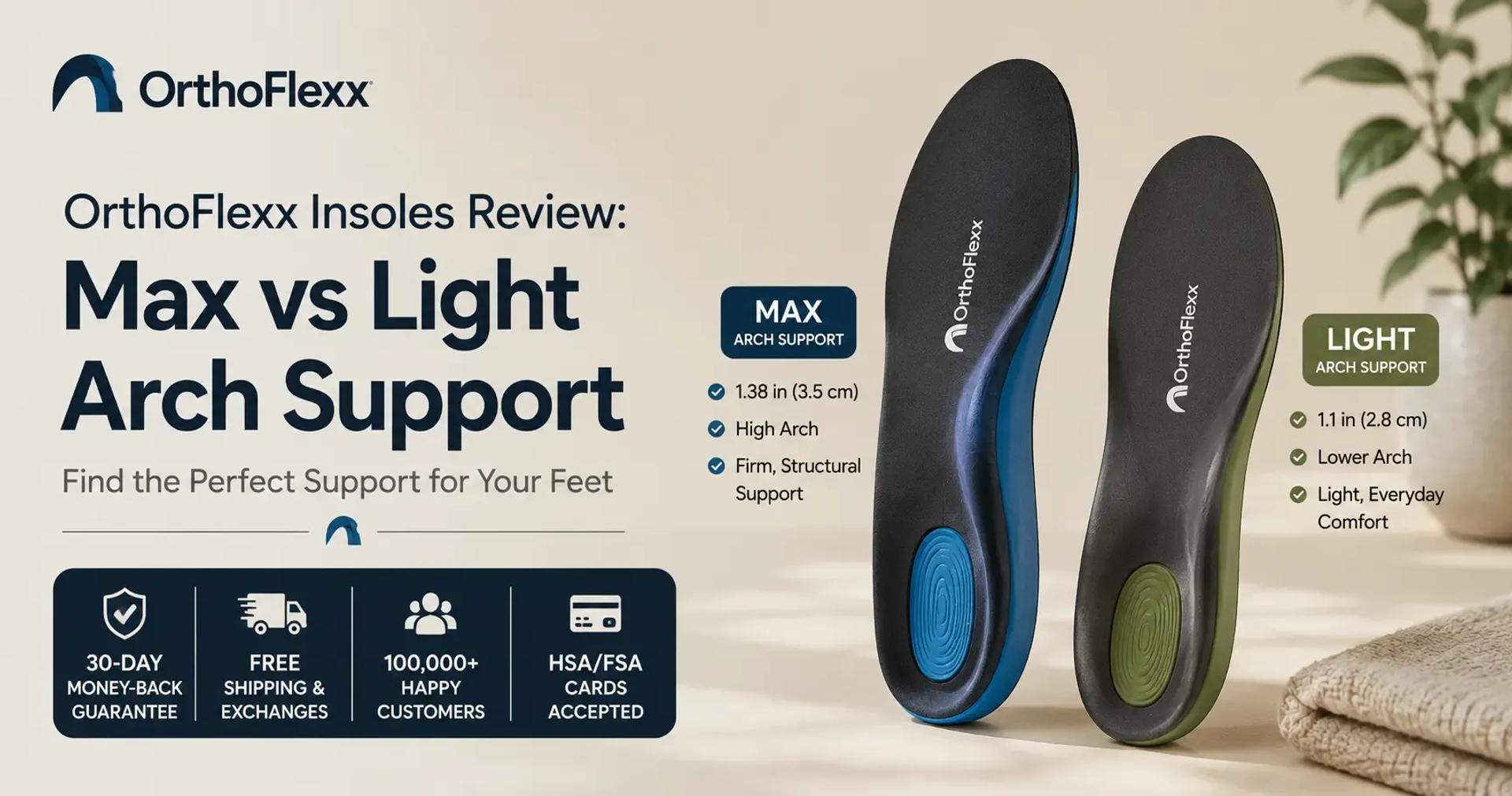
The last hour of a long shift is where it hits hardest. Your heels ache, your arches feel flat and tired, and every step home reminds you that your shoes gave up on you hours ago. You've probably tried the gel pads from the drugstore, the ones that flatten by lunchtime. This OrthoFlexx insoles review is for anyone stuck in that cycle, still hunting for arch support that actually holds up. Below, we compare the two OrthoFlexx models, break down who each one suits, and cover the honest trade-offs before you spend a cent.
Why Cheap Insoles Keep Letting You Down
Most soft foam inserts feel great for a day, then collapse under your body weight. Once that cushioning packs down, your arch loses its support, and the ache returns.
That's the core problem. Real arch support needs to be firm enough to hold your foot in a better position, yet comfortable enough to wear all day. Get only one of those, and the insole fails you.
OrthoFlexx builds its whole approach around that balance. The brand positions its insoles to resist collapse under load, which is exactly where budget foam tends to fall short.
The Two OrthoFlexx Models, Explained
OrthoFlexx keeps things refreshingly simple. Instead of a confusing wall of options, you choose between two levels of support. The right pick depends on how much arch height and firmness your feet actually want.
Let's break down each one using what it offers, why it matters, and who it fits.
Max Arch Support: For Firm, Structural Support
The Max model features a high arch elevation of 1.38 inches (3.5 cm) built from firm, resilient material.
- Feature: Sturdy arch support designed to resist collapse under body weight.
- Benefit: Your foot stays in a more supported position throughout the day.
- Practical relevance: This may appeal to people spending long hours standing, or those seeking stronger structural support.
The brand positions the Max model for people dealing with plantar fasciitis, flat feet or fallen arches, bunions, and foot alignment concerns. It's the firmer, more assertive option.
Dr. Elizabeth Daughtry, DPM, D.ABFAS, FACFAS, and a 2024 Forbes Health Advisory Board Member, has shared a testimonial recommending the Max Arch Support insoles, noting the support and comfort they provide. That's a professional's personal recommendation, not a medical guarantee, but it's a meaningful signal for shoppers weighing firm support.
Want a closer look at the firmer option? See the OrthoFlexx Max Arch Support details before deciding.
Light Arch Support: For Gentle, Everyday Comfort
Not everyone wants a tall, firm arch. The Light model offers a lower arch elevation of 1.1 inches (2.8 cm) for a softer feel.
- Feature: Lighter arch support with a gentler elevation.
- Benefit: Comfortable, everyday support without an aggressive arch underfoot.
- Practical relevance: This suits people who found other arch supports too high or too firm, or who mainly want relief from general foot fatigue.
If firm insoles have felt like standing on a golf ball, the Light model is likely your better starting point. It focuses on comfort first while still adding structure.
OrthoFlexx Max vs Light: A Quick Comparison
Here's the practical breakdown when you're deciding between the two.
| Factor | Max Arch Support | Light Arch Support |
|---|---|---|
| Support level | Stronger, firmer | Lighter, gentler |
| Arch elevation | 1.38 in / 3.5 cm | 1.1 in / 2.8 cm |
| Intended users | Strong-support seekers | Light-support seekers |
| Focus | Firm structural support | Comfort with light support |
| Brand-positioned for | Plantar fasciitis, flat feet, bunions, alignment | Foot fatigue, general comfort |
Neither model is universally "better." The right choice depends on your feet, your comfort preference, and how much support you actually want. Still weighing them? Compare both OrthoFlexx options side by side to match one to your needs.
Honest Pros and Cons
No insole is perfect for everyone. Here's a straight look based on the supplied information.
Pros
- Two clear support levels, so you can match firmness to your feet
- Max model built to resist collapse under body weight
- Strong third-party reputation, with a Trustpilot rating of 4.6 stars and a 4.8/5 Excellent mark
- Reported over 100,000 customers, plus a professional testimonial from a podiatrist
- Backed by a 30-day money-back guarantee, free shipping, and free exchanges
- HSA/FSA cards accepted, which helps with budgeting
Things to consider
- Firm arch support can feel strong at first, so adaptation may take time
- The high 1.38-inch Max arch won't suit everyone's comfort preference
- Individual results vary, and no insole is a substitute for medical care
- Persistent or severe foot pain warrants a professional opinion
Who Should Consider Each Model
Match the insole to your situation, and the decision gets easy.
- Consider the Max model if you want firmer, taller support, or if you're seeking comfort for flat feet, plantar fasciitis, bunions, or alignment concerns.
- Consider the Light model if you found other arch supports too high, or you mainly want everyday comfort and relief from tired feet.
A quick honesty note: if your pain is severe, persistent, or worsening, speak with a qualified healthcare professional first. Insoles are designed to support comfort, not to diagnose or treat a medical condition.
Why the Guarantee Lowers Your Risk
Trying supportive insoles always carries one worry: what if they don't work for you?
OrthoFlexx addresses that with a hassle-free 30-day money-back guarantee, described as no questions asked. If you don't find the comfort you're after, you can request a refund. Free shipping and exchanges make swapping models simpler if you pick the wrong support level.
Policies can change, so it's worth confirming the current refund terms before you buy. Still, that safety net makes testing a pair far less daunting.
The Bottom Line
Choosing between the two comes down to a single question: do your feet want firm, structural support, or gentle everyday comfort?
If you're after stronger support, higher arch elevation, and relief geared toward flat feet or plantar fasciitis, the Max Arch Support model is the natural pick. If you've struggled with insoles that felt too tall or too rigid, the Light Arch Support gives you structure without the aggressive arch.
Either way, the 30-day money-back guarantee, free shipping, and HSA/FSA acceptance mean testing a pair carries little downside. When you're ready to decide, explore the OrthoFlexx options and pick the support level that fits your feet. [Affiliate Link: OrthoFlexx Collection]
Frequently asked questions
It depends on how much support you want. The Max Arch Support suits people seeking firmer, taller support and is positioned for concerns like flat feet and plantar fasciitis. The Light Arch Support fits those who prefer gentler support or find other insoles too high or firm.
The main difference is arch height and firmness. The Max model has a 1.38-inch arch and firmer material for stronger structural support. The Light model has a lower 1.1-inch arch and a softer feel, focused on everyday comfort rather than aggressive support.
The brand positions the Max Arch Support model for people dealing with plantar fasciitis, and a podiatrist has recommended it in a testimonial. It's designed to support comfort, not to cure or treat any condition. For ongoing pain, check with a healthcare professional.
Yes. OrthoFlexx offers a hassle-free 30-day money-back guarantee, described as no questions asked, plus free shipping and exchanges. If the insoles don't deliver the comfort you want, you can request a refund. Confirm the current refund policy before purchasing, since terms can change.
For shoppers who value firm, collapse-resistant arch support with a low-risk return policy, they can be worth considering. OrthoFlexx shows a 4.6-star Trustpilot rating, reports over 100,000 customers, and includes a professional testimonial. Value ultimately depends on your feet and comfort needs.
The site states that HSA and FSA cards are accepted, which can make supportive insoles easier to budget for. Since eligibility and card policies vary, it's smart to confirm at checkout and review the current details before completing your purchase.
About the author
Caleb Ashford
Consumer Technology & Lifestyle Analyst
Caleb writes about travel gear, everyday carry products, and consumer technology. His work simplifies technical specifications into practical advice so readers can confidently compare products before buying.
View All Posts