
Gala GLP-1 Review: What the Compounded vs. Ozempic Price Gap Actually Means
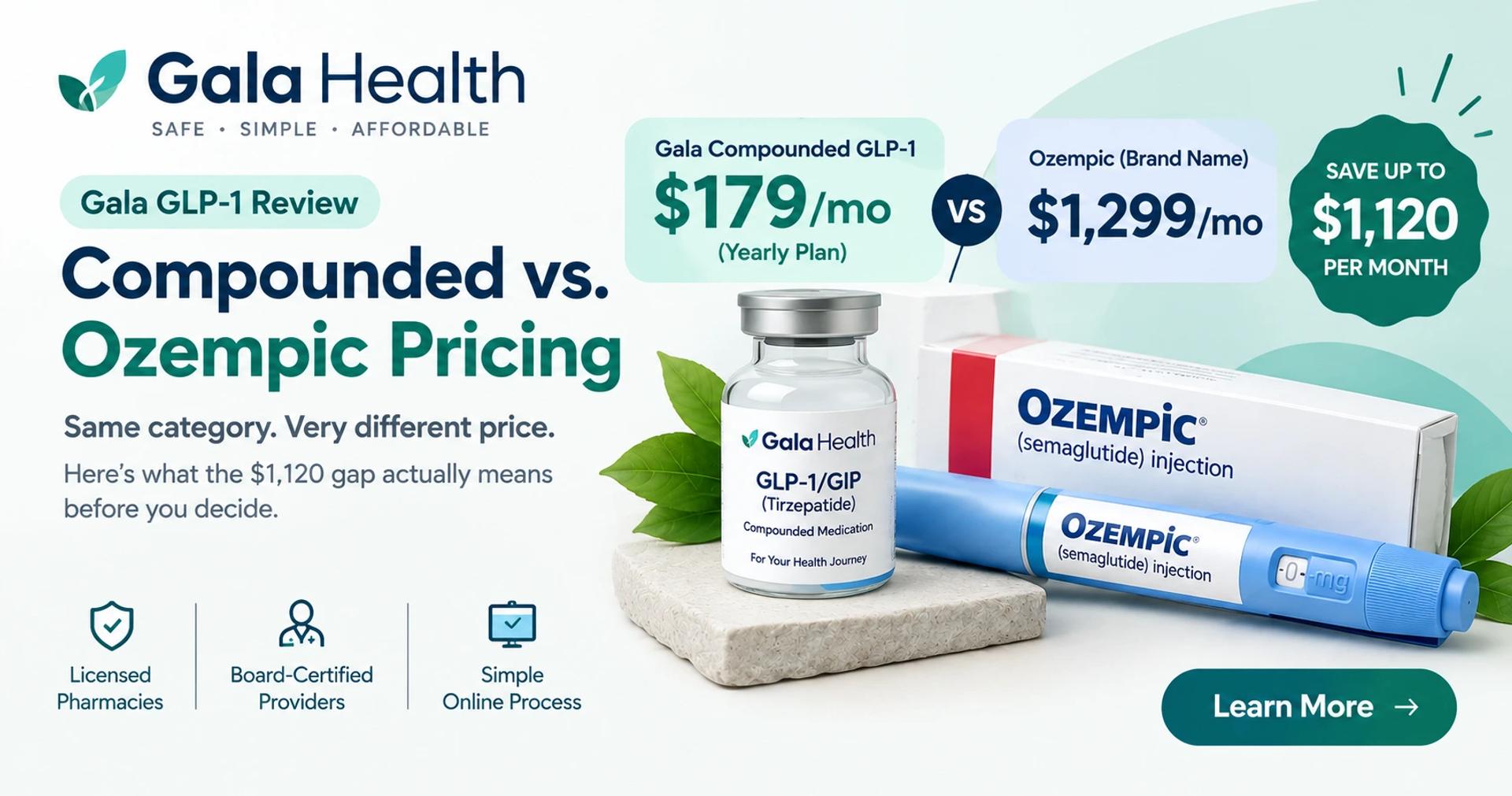
A $1,120-a-month difference is hard to ignore. Gala GLP-1 lists compounded GLP-1/GIP at $179 a month against brand-name Ozempic at $1,299- the same general category of medication, a dramatically different price. Understanding what that gap represents matters more than which number looks better.
What You're Actually Choosing Between
Gala's site lists two weight-loss paths: a compounded GLP-1/GIP product (including tirzepatide) at $179/month on a yearly plan, and brand-name Ozempic at $1,299/month. A third option, an oral Wegovy pill, is listed as coming soon.
Feature: Two GLP-1 paths at very different price points. What it means: The choice isn't just "cheaper vs. more expensive"; it's compounded vs. FDA-approved. Benefit: Lower-cost access for people who understand and accept that distinction. Who it's for: Price-sensitive patients without insurance coverage for brand-name GLP-1 drugs
Gala's site explicitly states its compounded GLP-1 is not FDA-approved and is sourced from licensed compounding pharmacies. Ozempic, by contrast, is an FDA-approved, manufacturer-produced medication. That regulatory difference is the actual explanation for most of the price gap, not a difference in "how strong" the treatment is.
Why the Price Gap Is This Large
Brand-name GLP-1 drugs carry the cost of large-scale manufacturing, FDA approval, and patent-protected pricing. Compounded versions, prepared by individual pharmacies for individual patients, don't carry those same costs, which is a large part of why compounded options have consistently undercut brand-name pricing since the shortage-era compounding boom began in 2022.
It's worth knowing that compounded GLP-1 access has narrowed since then. The FDA declared the Ozempic/Wegovy semaglutide shortage resolved in 2025, closing the shortage-based exception that allowed broad compounding of exact-copy medications. Compounding pharmacies can still legally prepare individualized formulations like a GLP-1/GIP combination that isn't identical to a single approved product, which is the likely basis for Gala's continued compounded offering.
What "Sourced From Licensed Compounding Pharmacies" Actually Means
Gala's site specifies its compounded GLP-1 is sourced from licensed compounding pharmacies, a detail worth understanding rather than skimming past. Licensed compounding pharmacies operate under state pharmacy board oversight and, for larger-scale operations, potential FDA registration as outsourcing facilities, which involves real regulatory accountability even without full FDA drug approval.
This distinction matters because the compounded-medication market has also drawn scrutiny for counterfeit and improperly sourced products, particularly during the high-demand shortage years. A platform sourcing from licensed, identifiable pharmacies is operating within the legitimate part of that market but it's still a fair question to ask any provider directly which specific pharmacy prepares your medication, since that transparency is a reasonable thing to expect regardless of price.
What the Process Actually Involves
Gala's site describes a free online assessment to determine eligibility, provider review, and prescription if appropriate a similar model to most GLP-1 telehealth platforms. The site states providers are licensed in all 50 states and that its physicians have trained at institutions including Mount Sinai, Harvard Medical School, and Columbia University Medical Center, per the brand's own claims.
The Ozempic Price, in Context
The $1,299/month figure listed for brand-name Ozempic is worth putting in perspective. This reflects list pricing without insurance; many people with insurance coverage for GLP-1 medications pay substantially less out of pocket, sometimes a small fraction of that figure, depending on their specific plan and whether their insurer covers GLP-1 medications for their particular diagnosis.
This is the single biggest variable in whether the compounded option's savings are actually meaningful for you. Someone with strong insurance coverage for Ozempic may find the brand-name option cheaper in practice than the "list price" comparison suggests; someone without any coverage faces the full gap as listed.
Weighing the Two Options
Compounded GLP-1/GIP may make sense if you:
- Don't have insurance coverage for brand-name GLP-1 medication
- Understand and accept that compounded medications aren't FDA-approved
- Want tirzepatide-class treatment at a substantially lower monthly cost
Brand-name Ozempic may make sense if you:
- Have insurance that covers or subsidizes it, changing the real cost comparison
- Specifically want an FDA-approved product with the associated manufacturing and quality oversight
- Prefer to wait rather than use a compounded alternative
Neither choice is right for everyone, and eligibility for either ultimately depends on a licensed provider's assessment, not personal preference alone.
Questions Worth Asking Before Choosing Either Path
Regardless of which option seems more appealing based on price alone, a few questions are worth getting clear answers to during the assessment process:
- What specific formulation is in the compounded product, and how does its dosing compare to the branded equivalent?
- What ongoing monitoring is included in the monthly price? Is it medication only, or does it include provider check-ins as your treatment progresses?
- What happens if the compounded option becomes unavailable due to further regulatory changes, and is there a clear path to switching if needed?
- What's the cancellation and refund policy if the treatment doesn't work as hoped or you decide to stop?
A platform that can answer these clearly is generally a better sign of transparency than pricing alone.
What "Results May Vary" Actually Means Here
Gala's site references testimonials from Christina (23 lbs in 5 months), Diana (28 lbs in 3 months), and Kristen (32 lbs in 4 months) alongside a stated 50,000+ success stories. These are individual, brand-reported experiences, not guaranteed or typical outcomes. The site's own disclaimer that results may vary and aren't guaranteed is worth taking at face value rather than treating the highlighted testimonials as representative.
Bottom Line
The price gap between Gala's compounded and brand-name GLP-1 options reflects a real regulatory and manufacturing distinction, not just a discount. Whether the compounded route is worth it depends on your comfort with that distinction and whether insurance changes the brand-name math for you specifically.
Frequently asked questions
Not exactly. Gala's compounded product includes tirzepatide-class GLP-1/GIP medication prepared by a compounding pharmacy, while Ozempic is a specific FDA-approved semaglutide product; they're related but not identical.
Compounded medications skip the manufacturing scale and FDA approval costs built into brand-name pricing, which is the primary driver of the price difference rather than a difference in treatment strength.
No, Gala's site explicitly states its compounded GLP-1 is not FDA-approved, though it states the product is sourced from licensed compounding pharmacies.
The site doesn't state an insurance requirement for its listed pricing; confirming current insurance policy and coverage details directly with Gala is worth doing before committing to either option.
No, those are individual, attributed experiences, and Gala's own site states that results may vary and aren't guaranteed for any individual patient.
About the author
Noah Kingsley
Food & Wellness Research Writer
Noah researches food brands, supplements, beverages, and wellness products. His articles explain ingredients, product positioning, and real-world value in a straightforward, reader-friendly way.
View All Posts