
Natural Cycles Review: What to Know Before You Rely on It
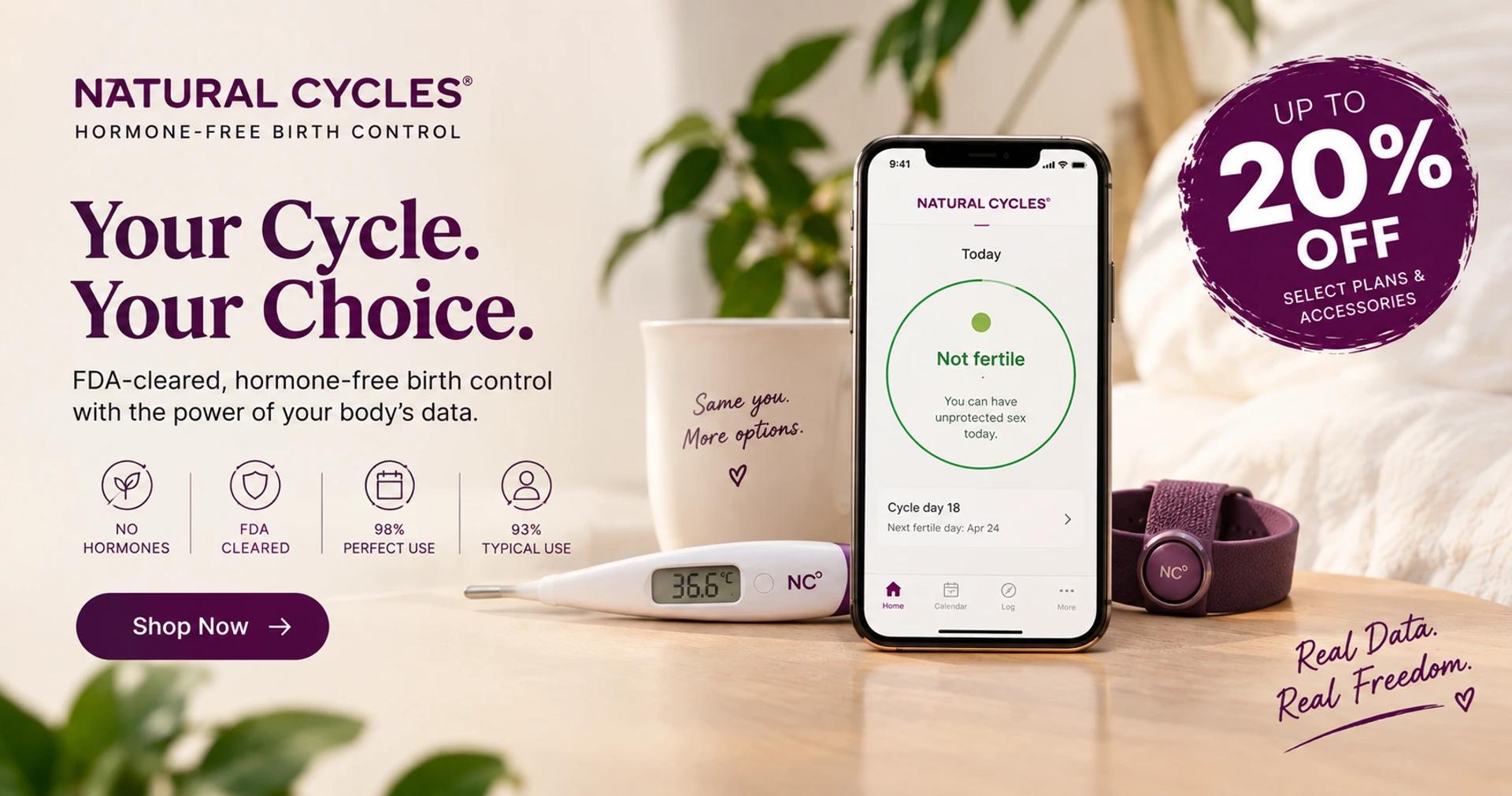
Choosing between hormonal and non-hormonal birth control usually comes down to one tradeoff: convenience versus side effects. Natural Cycles positions itself as a way to get real contraceptive protection without hormones, but "FDA-cleared" and "actually reliable for you" aren't automatically the same thing. Here's what's actually worth knowing.
What Natural Cycles Actually Is
NC° Birth Control is an FDA-cleared app that uses your basal body temperature, combined with an algorithm, to identify which days you're likely fertile and which days you're not. On predicted fertile days, the app tells you to use protection or avoid unprotected sex; on "Green Days," it indicates pregnancy protection isn't needed.
This is a real, regulated medical device. Natural Cycles has now received six separate FDA clearances, most recently in July 2026 for an updated AI-driven version of its fertility algorithm. That's a meaningfully different category than a generic period-tracking app.
The Effectiveness Numbers, Without the Marketing Spin
This is the part worth reading carefully. Natural Cycles reports 98% effectiveness with perfect use and 93% with typical use. Those are two very different numbers, and the gap between them matters more than the headline figure.
Perfect use means using the app exactly as instructed, every day, without exception: no missed temperature readings, no unprotected sex on fertile days.
Typical use reflects real-world behavior, including missed readings and occasional inconsistency, which is why it's the more realistic number for most people.
At 93% typical-use effectiveness, Natural Cycles sits in the same range as the birth control pill (93%) and above condoms alone (87%), though below hormonal IUDs (>99%), per the 2023 edition of Contraceptive Technology, the source the brand itself cites.
Feature: Distinct perfect-use and typical-use effectiveness rates. What it means: Real-world results depend heavily on how consistently you use it. Benefit: Transparency about this gap, rather than leading only with the higher number. Who it's for: Anyone deciding whether they're realistically going to track daily
Why This App Attracted Scrutiny And What Changed
It's worth being upfront that Natural Cycles has faced real criticism, not just marketing skepticism. In 2018, the UK's Advertising Standards Authority found one of the company's ads misleading for overstating accuracy, and a Swedish clinic separately reported a cluster of unintended pregnancies among app users that same year.
Natural Cycles has since accumulated years of additional FDA review and six clearances total, with ongoing algorithm refinement based on real-world data, and its effectiveness rates have remained consistent with peer-reviewed research since. The core lesson from that history still applies directly to how well this works for any individual: it requires genuinely consistent daily use, and the "typical use" number exists precisely because not everyone achieves that consistency.
Who This Actually Fits
Good fit if you:
- Want to avoid hormonal contraception specifically
- Are comfortable taking your temperature at a consistent time each morning
- Don't need STI protection from this method (it provides none)
- Are willing to use a backup method (like condoms) on predicted fertile days
May want to consider alternatives if you:
- Have an irregular schedule that makes consistent morning temperature-taking impractical
- Need a "set it and forget it" method with minimal daily involvement
- Need STI protection as part of your contraceptive method
The Daily Commitment, Realistically
It's worth being specific about what "consistent daily tracking" actually requires, since this is the single biggest factor in whether typical-use effectiveness (93%) or something closer to perfect-use effectiveness (98%) is realistic for you.
The core task is taking your temperature at roughly the same time each morning, before getting out of bed, and logging it in the app. This takes under a minute once it's a habit, but it does need to happen most mornings; a late-night shift, a poor night's sleep, alcohol, or illness can all affect the reading enough to matter. On days the app marks as fertile, you'd need a backup method (typically condoms) if you're having sex.
None of this is complicated in isolation. The challenge, based on the app's own reported effectiveness gap, is sustaining it consistently over months and years without gaps.
What You Get Beyond Birth Control
Natural Cycles isn't limited to contraception. The same underlying tracking supports NC° Plan Pregnancy (identifying fertile windows to help conceive), NC° Follow Pregnancy, NC° Postpartum, and NC° Perimenopause modes useful if your reproductive goals might shift over time and you'd rather not switch tools entirely.
An optional NC° Band wearable can automate the temperature measurement overnight, which may help with the consistency issue at the core of the typical-use vs. perfect-use gap.
How It Compares to Other Non-Hormonal Options
Natural Cycles isn't the only non-hormonal option, and it's worth knowing where it sits among the alternatives.
The copper IUD is non-hormonal and, once placed, requires essentially no ongoing daily action, with effectiveness above 99%. It requires a clinical insertion procedure and isn't reversible without a provider visit, which is a very different tradeoff than an app requiring daily engagement but no procedure at all.
Condoms alone are non-hormonal and require no daily tracking, but sit at 87% typical-use effectiveness and offer STI protection, which Natural Cycles does not.
Traditional fertility awareness methods (calendar-based or symptom-based tracking without an app) share the same core logic as Natural Cycles but generally rely on manual calculation rather than an algorithm processing daily biomarker data a difference that plausibly contributes to more consistent, personalized predictions over time.
Choosing between these comes down to how much daily involvement you're willing to take on versus how much you want to avoid hormones, procedures, or reduced STI protection; there's no single right answer across all three.
Bottom Line
Natural Cycles is a legitimate, FDA-cleared alternative to hormonal birth control, with real effectiveness data behind it, but the honest 93% typical-use figure, not the 98% perfect-use figure, is the number to plan around. If daily consistency is realistic for you, it's a reasonable option worth exploring further.
Frequently asked questions
With typical use, both sit at 93% effectiveness according to the data Natural Cycles cites; with perfect use, Natural Cycles reports 98%.
No, it's a method for pregnancy prevention only and provides no STI protection, so a barrier method is still necessary for that.
No prescription is required, per the brand's site, though it's still a regulated, FDA-cleared medical device.
Missed readings are part of why typical-use effectiveness (93%) is lower than perfect-use effectiveness (98%); consistency directly affects reliability.
It's worth being honest with yourself here: the method's real-world effectiveness depends heavily on consistent daily tracking, so someone who struggles with that may get better results from a lower-effort method.
About the author
Noah Kingsley
Food & Wellness Research Writer
Noah researches food brands, supplements, beverages, and wellness products. His articles explain ingredients, product positioning, and real-world value in a straightforward, reader-friendly way.
View All Posts